
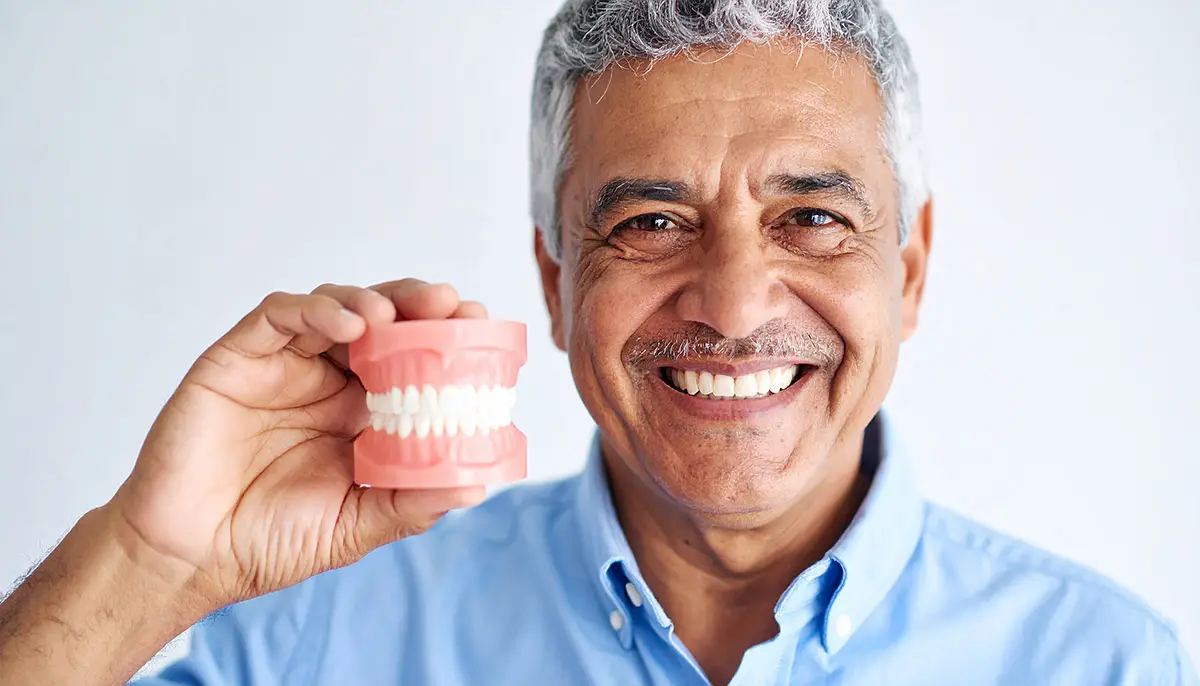
If you are missing several teeth but still have healthy natural teeth remaining, a partial denture can restore those spaces without replacing an entire arch. However, patients are often surprised to learn that partial dentures can be made using different materials and framework designs. Flexible partial dentures, cast metal partial dentures, and combination designs each offer different characteristics.
Panhandle Dental provides partial dentures in Amarillo, including flexible, cast metal, and combination options. Choosing between them is not simply a matter of deciding which one looks best. Your remaining teeth, bite, location of missing teeth, chewing forces, appearance goals, gum health, and long-term treatment plan all influence which design may be appropriate.
Understanding the differences can help you ask better questions during your denture consultation and feel more confident about the recommendation you receive.
What Is a Partial Denture?
A partial denture is a removable dental appliance designed to replace one or more missing teeth while preserving natural teeth that remain in the mouth.
The replacement teeth are connected to a base or framework that fits around existing teeth and rests partly against the gums.
Depending on the design, clasps or other components help stabilize the appliance.
Unlike a traditional dental bridge, which is generally fixed in place, a partial denture is typically removed for cleaning.
Why Does Partial Denture Material Matter?
The framework provides the structural foundation for the replacement teeth.
Its material can affect flexibility, rigidity, thickness, strength, appearance, adjustment options, and the way chewing forces are distributed.
A design that works well for one patient may not be appropriate for another.
For example, someone replacing several back teeth may need different structural support than someone replacing one or two teeth in a highly visible area.
Therefore, material selection is both a clinical and cosmetic decision.
What Is a Flexible Partial Denture?
A flexible partial denture uses a bendable dental material rather than relying entirely on a rigid metal framework.
The gum-colored base can often include flexible clasping areas that blend more naturally with surrounding tissue.
Because there may be less visible metal, some patients appreciate the appearance of flexible designs.
Flexible partials may also feel lightweight and less rigid inside the mouth.
However, flexibility is not ideal for every bite or missing-tooth pattern. Some situations require greater rigidity for predictable support.
What Is a Cast Metal Partial Denture?
A cast metal partial denture uses a carefully designed metal framework as its foundation.
The metal can provide significant strength while remaining relatively thin.
Replacement teeth and gum-colored acrylic are attached to the framework in the areas where teeth are missing.
Metal clasps or other components may engage selected natural teeth for retention and support.
Because the framework is rigid, it can help distribute chewing forces in a controlled way.
Which Partial Denture Looks More Natural?
The answer depends on the individual design.
Flexible partial dentures may have an aesthetic advantage in some situations because clasping components can sometimes blend with gum tissue rather than appearing metallic.
However, cast metal partial dentures can also be designed to minimize the visibility of metal components.
Your smile line, location of missing teeth, position of supporting teeth, and clasp design all affect the final appearance.
Before treatment begins, ask your dentist which components are likely to be visible when you smile or speak.
Which Partial Denture Feels Thinner?
Cast metal frameworks can often be made relatively thin because the metal provides strength without requiring excessive bulk.
This can be especially helpful in areas such as the palate, where a thick appliance might affect speech or the way food feels.
Flexible partial dentures may feel light because of the material used, but the amount of material needed depends on the design.
Comfort depends on more than thickness alone. Proper fit and support are equally important.
Which Type Is Better for Chewing?
Chewing ability depends on the entire partial denture design rather than one material.
The number of missing teeth, location of supporting teeth, gum health, bite relationships, fit, and muscle coordination all affect function.
A rigid cast metal framework can provide excellent support in many situations because it resists unwanted flexing during chewing.
However, appropriately selected flexible partial dentures can also provide useful function.
The better question is which design works best with the anatomy and forces in your mouth.
How Do Natural Teeth Support a Partial Denture?
Remaining natural teeth often play an important role in stabilizing a partial denture.
Depending on the design, certain teeth may help guide the appliance into position, prevent lifting, or support chewing forces.
These supporting teeth need to be healthy enough to perform their role.
Before making the partial denture, your dentist may need to address cavities, gum inflammation, damaged restorations, or other concerns.
After the partial is delivered, careful cleaning around these teeth becomes especially important.
Benefits of Partial Dentures in Amarillo
When properly designed, partial dentures can provide several advantages for people who have healthy natural teeth remaining.
- Replaces several missing teeth: One appliance can restore multiple gaps within the same dental arch.
- Preserves remaining natural teeth: Healthy teeth can remain in place while missing teeth are replaced.
- Supports chewing function: Replacement teeth can help restore contact in areas where chewing has become difficult.
- Supports clearer speech: Replacing missing teeth may improve certain sounds affected by open spaces.
- Helps maintain tooth position: Filling gaps may reduce opportunities for nearby teeth to drift.
- Offers multiple design options: Flexible, cast metal, and combination partial dentures allow treatment to be individualized.
- Removable for cleaning: Patients can remove the appliance to clean both the partial and natural teeth thoroughly.
The greatest advantage comes from selecting a design based on oral health and function rather than material preference alone.
What Are Combination Partial Dentures?
A combination partial may use more than one material to balance strength, appearance, flexibility, and comfort.
For example, a strong internal structure may be combined with more aesthetic clasping components in visible areas.
This can give the dentist and dental laboratory additional flexibility when one material alone would not meet every requirement.
If a combination design is recommended, ask which portions are made from each material and why that approach is being used.
How Are Partial Dentures Made?
The process begins with an examination of your remaining teeth, gums, and bite.
Dental imaging may be used to evaluate supporting teeth. Digital scans or impressions can capture the shape of the mouth.
Your dentist then plans how the partial will gain support and retention.
Once the appliance is fabricated, it is placed in the mouth and checked for fit, pressure areas, bite, appearance, and retention.
Follow-up adjustments may be needed as you begin eating and speaking with the partial.
How Long Does It Take to Get Used to a Partial Denture?
A new partial can feel unfamiliar even when it fits correctly.
Your tongue and cheeks need time to adjust to the new shape inside the mouth.
Speech may feel different initially, and chewing may require practice.
Begin with softer foods and smaller bites. Chew carefully on both sides when possible.
Reading aloud can also help your tongue become accustomed to the appliance.
Persistent pain should not simply be tolerated. Pressure spots can often be improved with professional adjustments.
How Should You Clean a Partial Denture?
Remove and clean your partial denture daily according to your dentist’s instructions.
Use a soft denture brush and a product designed for denture materials. Some regular toothpastes can be abrasive to denture surfaces.
Rinse the appliance after meals when practical.
In addition, brush your natural teeth carefully before reinserting the partial.
Pay particular attention to teeth that contact clasps because plaque can collect around these areas.
Can You Sleep With a Partial Denture?
Many patients are advised to remove removable dentures while sleeping so the tissues can rest and the appliance can be cleaned thoroughly.
However, instructions can vary depending on the specific dental situation.
Follow the recommendations provided by Panhandle Dental rather than assuming that all partial dentures should be worn on the same schedule.
Can a Partial Denture Damage Natural Teeth?
A properly designed partial should work with the remaining teeth. However, daily cleaning is essential.
Plaque can collect around clasps and supporting teeth. If these areas are not cleaned effectively, cavity and gum disease risk may increase.
A poorly fitting partial can also place inappropriate pressure on teeth or tissues.
Regular dental checkups allow the dentist to monitor both the appliance and the teeth supporting it.
What If Your Partial Denture Starts Feeling Loose?
Changes in gum and bone shape can affect the fit of a partial denture over time.
Clasps and other components can also wear or become distorted.
Do not bend metal clasps yourself. Home adjustments can weaken the framework and may damage supporting teeth.
Instead, schedule an evaluation so your dentist can determine whether the partial needs adjustment, repair, relining, or replacement.
Can Another Tooth Be Added to an Existing Partial?
Sometimes an existing partial can be modified if another tooth is lost.
However, modification depends on the framework, material, location of the missing tooth, and condition of the appliance.
Flexible and cast metal partial dentures can have different repair limitations.
In some cases, fabricating a new partial provides a more predictable result than modifying an older one.
How Long Do Partial Dentures Last?
Partial dentures can provide years of service, but they are not expected to remain unchanged indefinitely.
Natural teeth can move, gum contours can change, bite surfaces can wear, and clasps or denture teeth may require maintenance.
How long an appliance lasts depends on material, oral health, cleaning habits, bite forces, and changes in the mouth.
Regular examinations give your dentist an opportunity to address smaller concerns before they compromise the entire prosthesis.
Frequently Asked Questions About Partial Dentures
Are flexible partial dentures always better than metal partials?
No. Flexible materials may provide aesthetic advantages in some cases, while cast metal frameworks may provide better rigidity and support in others.
Will people be able to see the clasps?
Visibility depends on clasp location, smile line, natural tooth position, and the chosen design. Your dentist can explain which components may be visible.
Do partial dentures require adhesive?
A properly designed partial usually gains retention from its fit and supporting components. Ask your dentist before using adhesive to compensate for looseness.
Can I eat normally with a partial denture?
Many patients gradually return to a broad diet after adapting to the appliance. Harder foods may need to be cut into smaller pieces.
Can I have a partial denture if I only have a few teeth left?
Possibly. Your dentist must determine whether the remaining teeth are healthy and positioned appropriately to support the appliance.
Choose a Partial Denture Designed for Your Smile
Flexible and cast metal partial dentures each have useful applications, but material alone should not determine your treatment. Your remaining teeth, bite, appearance goals, gum health, cleaning ability, and long-term dental plan all matter when designing a partial denture.
If you are missing several teeth and want to explore partial dentures in Amarillo, contact Panhandle Dental at (806) 677-0202 or Contact Us. Book an Appointment at Panhandle Dental, 7200 SW 45th Ave #5, Amarillo, TX 79109, to compare flexible, cast metal, and combination partial denture options.