
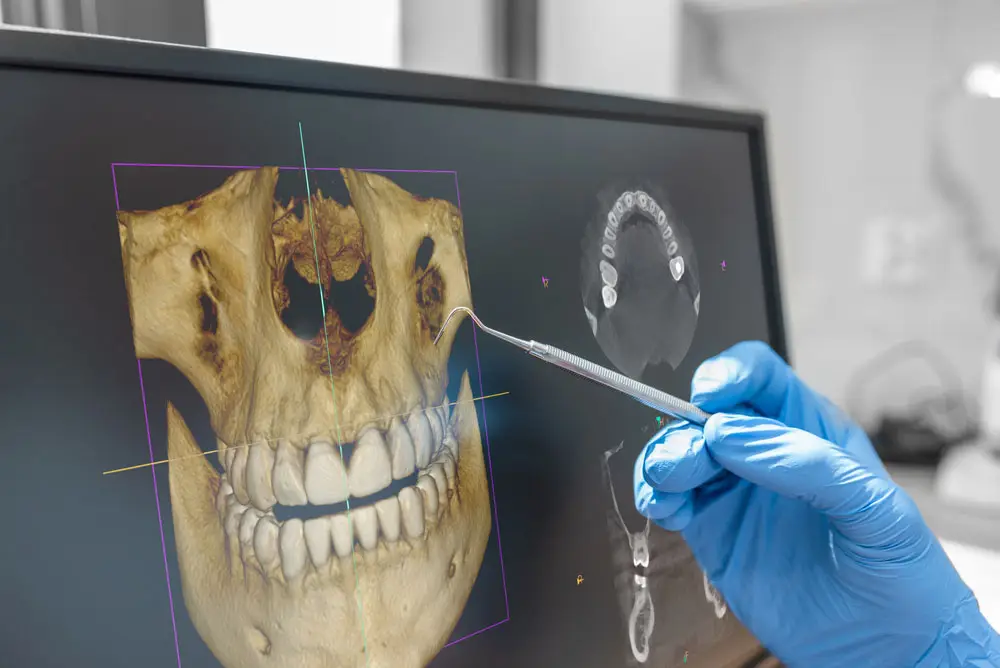
If your teeth feel comfortable and you have not noticed any visible problems, it is reasonable to wonder why your dentist might still recommend dental X-rays. After all, if nothing hurts, what could an X-ray possibly find? The answer is that many dental conditions begin in places that cannot be seen during a visual examination, and some cause few or no symptoms until they become more advanced.
At Panhandle Dental, dental imaging may be used as part of preventive dentistry in Amarillo when it is clinically appropriate for a patient’s individual needs. Dental X-rays give the dentist another view of the teeth, roots, supporting bone, and areas between teeth, helping identify concerns that may otherwise remain hidden.
That does not mean every patient needs the same X-rays at every visit. The type and frequency of imaging can vary based on age, dental history, cavity risk, gum health, symptoms, previous treatment, and other factors.
What Can Dental X-Rays Show That a Dentist Cannot See?
A visual dental examination provides valuable information about the surfaces of your teeth and gums. However, teeth are three-dimensional structures, and much of their anatomy is hidden below the gumline or between neighboring teeth.
Dental X-rays can help the dentist evaluate areas such as:
- Spaces between teeth where early cavities may develop
- Tooth roots below the gumline
- Bone surrounding and supporting the teeth
- Developing permanent teeth in younger patients
- Wisdom tooth position
- Areas around existing fillings, crowns, or other restorations
- Signs of infection near a tooth root
- Changes in bone levels around teeth
- Teeth that have not erupted normally
Because these areas cannot always be evaluated by looking into the mouth alone, imaging can provide information that helps complete the diagnostic picture.
Why Would I Need Dental X-Rays If Nothing Hurts?
Pain is useful because it alerts us that something may be wrong. However, pain is not an early warning system for every dental condition.
A cavity between two teeth, for example, can sometimes grow before the patient notices sensitivity. Likewise, changes in the bone surrounding a tooth may occur gradually without causing obvious discomfort.
Therefore, waiting for pain before looking for a dental problem can sometimes mean waiting until that problem requires more extensive treatment.
Dental X-rays are one tool dentists can use to identify certain conditions sooner. When combined with a clinical examination and your dental history, they may help your dentist decide whether an area should simply be monitored or whether treatment is appropriate.
What Types of Dental X-Rays Are Commonly Used?
Different dental images show different parts of the mouth. Your dentist selects the type of X-ray based on what needs to be evaluated.
Bitewing X-Rays
Bitewing images commonly show the upper and lower back teeth in the same area. They are particularly useful for examining spaces between teeth and checking bone levels around those teeth.
Because cavities between neighboring teeth can be difficult to see directly, bitewings can provide useful information during preventive examinations.
Periapical X-Rays
A periapical image typically shows an entire tooth from the visible crown through the root and surrounding bone.
These images may be useful when a patient has localized pain, a history of trauma, a suspected infection, or another concern involving a specific tooth.
Panoramic Images
A panoramic image provides a broad view of the jaws, teeth, and surrounding structures. It may be useful when evaluating wisdom teeth, tooth development, missing teeth, or other larger areas of the mouth.
No single type of dental X-ray is ideal for every situation. Consequently, the dentist may use different images at different stages of care.
How Often Should Adults Have Dental X-Rays?
There is no one schedule that is appropriate for every adult.
A patient who has frequent cavities, extensive existing dental work, periodontal concerns, or new symptoms may need imaging more often than someone with a stable dental history and a lower risk of disease.
Meanwhile, a new patient may need images that allow the dentist to establish a baseline and understand previous treatment.
The decision should be based on clinical need rather than automatically taking the same set of images at every appointment.
Are Dental X-Rays Only Used to Find Cavities?
No. Finding tooth decay is only one reason imaging may be recommended.
Dental X-rays can also help evaluate gum and bone health. If bone levels have changed around the teeth, for example, that information may be important when evaluating periodontal disease.
Likewise, an X-ray may help a dentist investigate a tooth that hurts when you bite, check an area around an old restoration, evaluate a developing permanent tooth, or examine the position of a wisdom tooth.
Therefore, dental imaging is better viewed as a diagnostic tool rather than simply a cavity detector.
What Happens During Dental X-Rays?
The process depends on the type of image being taken.
For an image taken inside the mouth, a small sensor is positioned near the teeth. You gently close your teeth or hold the sensor in place for a short period while the image is captured.
For a panoramic image, the imaging equipment moves around the outside of your head while you remain positioned in the machine.
Dental images are generally captured quickly. Digital systems also allow the dental team to review images on a computer screen, which can make it easier to explain areas being monitored or treated.
Are Dental X-Rays Safe?
Dental professionals aim to use imaging only when it provides useful diagnostic information. Modern digital dental imaging uses relatively low radiation exposure, and the dentist considers the patient’s individual circumstances when deciding whether X-rays are necessary.
If you are pregnant, think you may be pregnant, or have concerns about previous radiation exposure, tell the dental team before imaging. They can discuss the recommendation and answer questions specific to your situation.
Patients should also feel comfortable asking why a particular image is being recommended. Understanding what the dentist is evaluating often makes the process feel more purposeful.
Benefits of Dental X-Rays in Amarillo
When dental X-rays are recommended appropriately, they can provide several advantages as part of preventive and diagnostic care:
- Detects problems in hidden areas: Imaging may reveal changes between teeth, beneath restorations, around roots, or within supporting bone.
- Supports earlier diagnosis: Some dental concerns can be identified before they produce significant pain or visible changes.
- Helps dentists plan treatment: Knowing the shape of a root, location of decay, or condition of surrounding bone can help guide treatment decisions.
- Monitors changes over time: Previous images can provide a useful comparison when a dentist is determining whether an area is stable or changing.
- Provides information about developing teeth: Dental X-rays can help monitor permanent teeth as they develop and erupt.
- Supports gum health evaluation: Images can help dentists assess bone levels around teeth when periodontal problems are suspected.
- Helps evaluate dental restorations: Crowns, fillings, bridges, and root canal treated teeth may occasionally need imaging to evaluate surrounding structures.
Most importantly, imaging can help your dental team make decisions using more complete information rather than relying only on what is visible above the gums.
Can Dental X-Rays Find a Cavity Before I Feel It?
Yes, some cavities can be visible on dental X-rays before the patient develops symptoms.
This can be especially useful for decay between back teeth, where the surfaces touch each other and are difficult to inspect visually.
However, dentists do not diagnose cavities using an X-ray alone. The appearance of the tooth, your examination, previous imaging, cavity risk, and other factors may also influence the treatment recommendation.
In some cases, a very early area may be monitored closely while preventive measures are strengthened. In other situations, a filling may be recommended.
Why Might My Dentist Compare New X-Rays With Older Ones?
Comparison can provide valuable context.
A single image shows what an area looks like at one moment. Older images may help reveal whether something is new, stable, or progressing.
For example, a dentist might compare bone levels around a tooth, examine whether a suspicious area between teeth has changed, or evaluate the condition of a previously treated tooth.
This is one reason maintaining a consistent dental home can be helpful. A history of examinations and images allows your dental team to observe patterns over time.
Do Children Need Dental X-Rays?
Children may need dental imaging for different reasons than adults. Their mouths are constantly changing as baby teeth are lost and permanent teeth develop.
When clinically appropriate, X-rays may help a dentist evaluate cavities between teeth, monitor permanent tooth development, determine whether teeth are positioned appropriately, or investigate a specific concern.
However, just as with adults, the need for imaging should be individualized rather than based solely on age.
Can I Decline Dental X-Rays?
Patients can ask questions about any recommended procedure. If you are uncertain about dental imaging, talk with your dentist about why the X-rays are being suggested and what information they are expected to provide.
In some circumstances, a dentist may not be able to make a reliable diagnosis without necessary imaging. For example, the condition of a tooth root or hidden area may be impossible to evaluate completely through a visual examination.
An open conversation gives you an opportunity to understand the purpose of the recommendation and participate in decisions about your care.
Frequently Asked Questions About Dental X-Rays
Do I need X-rays at every cleaning?
Not necessarily. Imaging frequency depends on your dental history, symptoms, cavity risk, gum health, age, and previous findings.
Can an X-ray show an infection?
Dental imaging may show changes around the root or bone that can be associated with infection. The dentist also considers your symptoms and clinical examination.
Can dental X-rays show gum disease?
X-rays can help evaluate the bone supporting the teeth, which is important when assessing periodontal disease. The gums themselves are also examined clinically.
Why does the dentist need an X-ray before certain procedures?
Imaging may provide information about roots, surrounding bone, existing restorations, or nearby structures that helps the dentist plan treatment safely and accurately.
Will I know immediately what the X-ray shows?
Digital images can usually be reviewed promptly. Your dentist can explain relevant findings and discuss whether monitoring or treatment is recommended.
See More Than What Is Visible on the Surface
Feeling fine is certainly a good sign, but it does not always tell the complete story of your dental health. Dental X-rays can provide useful information about areas that cannot be examined directly, helping your dentist monitor your smile and identify concerns before they become more difficult to manage.
If you are due for a preventive dental visit or have questions about whether dental imaging is appropriate for you, contact Panhandle Dental at (806) 677-0202 or Contact Us. Book an Appointment at Panhandle Dental, 7200 SW 45th Ave #5, Amarillo, TX 79109, for personalized preventive dental care.