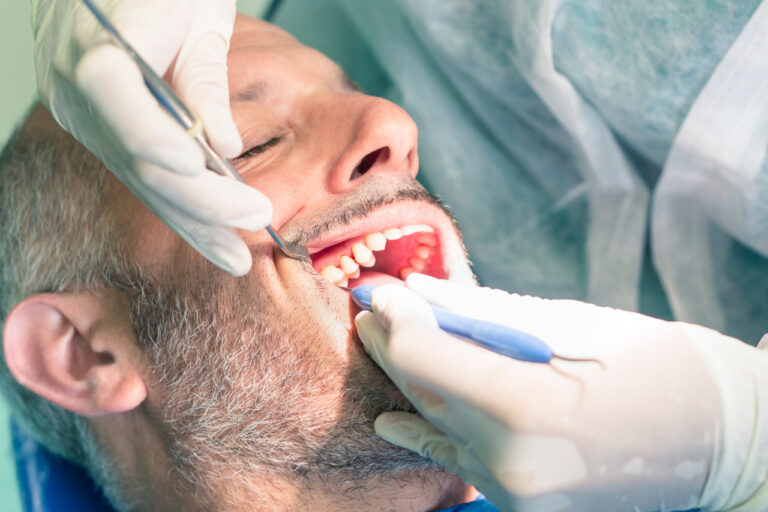

Being told that a tooth needs to be removed can create plenty of questions, especially when the dentist uses the words surgical extraction. Does that mean something is seriously wrong? Will recovery be difficult? Why can the tooth not simply be pulled in the usual way? In many cases, the term describes the technique required to remove a tooth safely when part of the tooth is difficult to access or its position makes a standard extraction less predictable.
Panhandle Dental provides oral surgery in Amarillo, including surgical extractions for teeth that require a more involved approach. The exact procedure depends on the condition of the tooth, the shape and position of its roots, surrounding bone, previous dental treatment, and whether the tooth has fully erupted.
Understanding the difference between a simple and surgical extraction can make the recommendation easier to understand and help you prepare for the appointment and recovery period.
What Is a Surgical Tooth Extraction?
A surgical tooth extraction is a procedure used to remove a tooth when the dentist cannot predictably access and remove it using a straightforward extraction technique alone.
For example, the visible portion of a tooth may have broken near the gumline. A tooth may also be partially covered by gum tissue or bone, positioned at an unusual angle, or have roots that require additional access.
During a surgical extraction, the dentist may create a small opening in the gum tissue, remove a limited amount of surrounding bone when necessary, or divide the tooth into smaller sections so it can be removed carefully.
The goal is controlled removal while protecting surrounding tissues as much as possible.
How Is a Surgical Extraction Different From a Simple Extraction?
A simple extraction is generally possible when a tooth has erupted fully and enough of the crown can be accessed with dental instruments.
The dentist gently loosens the tooth from the tissues that hold it in place and removes it from the socket.
A surgical extraction requires additional access. This does not automatically mean that the procedure will be dramatically more uncomfortable. Local anesthetic is used to numb the area, and additional comfort options may be discussed depending on the patient’s needs and the complexity of treatment.
The main difference is the method required to reach and remove the tooth predictably.
Why Might a Tooth Need a Surgical Extraction?
Several situations can make a surgical approach appropriate.
- A tooth has broken at or below the gumline.
- Only part of the tooth has erupted.
- The tooth is impacted beneath gum tissue or bone.
- The roots have a shape or position that makes conventional removal difficult.
- A previous large filling or crown has left little natural tooth structure available to grasp.
- Severe decay has weakened the visible portion of the tooth.
- A tooth has fractured during an attempted simple extraction.
- Surrounding anatomy requires a controlled surgical approach.
Dental imaging is often useful before treatment because it helps the dentist evaluate root shape, tooth position, surrounding bone, and nearby structures.
Does a Broken Tooth Always Need to Be Extracted?
No. Many broken teeth can be repaired.
Depending on how much healthy structure remains, treatment options might include bonding, a filling, a crown, or root canal therapy followed by a restoration.
However, extraction may be recommended when the fracture extends too far below the gumline, the tooth cannot support a reliable restoration, decay is too extensive, or the supporting structures are severely compromised.
The dentist’s goal is generally to preserve a natural tooth when it can be restored predictably. When that is no longer possible, removing the tooth can eliminate a source of pain, infection, or repeated dental problems.
What Happens Before a Surgical Tooth Extraction?
The process begins with an examination and review of your health history.
Tell the dental team about medications, supplements, allergies, medical conditions, previous reactions to anesthesia, and any concerns you have about treatment.
Dental X-rays may be used to evaluate the tooth and surrounding anatomy.
Your dentist will then explain why extraction is recommended, what type of procedure is expected, and what options may be available for replacing the tooth afterward when replacement is appropriate.
If sedation is planned, follow all preparation instructions carefully. Certain sedation options may require changes to eating, drinking, medication timing, or transportation arrangements.
Will I Be Awake During a Surgical Extraction?
Many surgical tooth extractions can be completed using local anesthetic, which numbs the treatment area while the patient remains awake.
However, patients who are anxious or who require more involved treatment may be candidates for additional comfort options.
Panhandle Dental offers nitrous oxide and oral conscious sedation as part of its sedation services. The appropriate option depends on your medical history, anxiety level, procedure, and individual treatment plan.
Even when sedation is used, local anesthetic is still important because sedation addresses relaxation while local anesthesia controls sensation in the treatment area.
What Happens During the Procedure?
After the area is thoroughly numb, the dentist gains access to the tooth.
If necessary, a small incision may be made in the gum tissue. In some cases, a limited amount of bone surrounding the tooth is carefully removed.
The tooth may then be divided into smaller sections. Removing sections separately can allow the dentist to use less force and work around difficult root shapes or limited access.
Once the tooth has been removed, the area is cleaned and evaluated. Sutures may be placed when appropriate.
Gauze is then positioned so pressure can help control bleeding while a blood clot begins forming in the socket.
What Should I Expect Immediately After a Surgical Extraction?
Numbness usually remains for a period after the appointment. Avoid chewing until normal sensation has returned so you do not accidentally injure your cheek, lip, or tongue.
Some oozing is expected during the early recovery period. Bite on gauze according to the instructions provided by your dental team.
Mild to moderate swelling and soreness can also occur, especially when the extraction required additional surgical access.
Your dentist will provide instructions tailored to your procedure. Follow those directions carefully because they are more useful than generic recovery advice.
How Do I Protect the Blood Clot?
The blood clot that forms in the socket is an important part of healing.
During the early recovery period, avoid actions that create strong suction or disturb the extraction area.
Your dental team may instruct you to:
- Avoid drinking through a straw.
- Avoid forceful spitting or aggressive rinsing during the initial healing period.
- Avoid smoking or vaping.
- Keep fingers and your tongue away from the socket.
- Follow instructions for gentle mouth rinsing when appropriate.
- Chew away from the surgical area.
Protecting the clot allows early healing to proceed normally.
What Can I Eat After a Surgical Tooth Extraction?
Soft foods are usually easiest during the first part of recovery.
Examples include:
- Yogurt
- Scrambled eggs
- Mashed potatoes
- Soft pasta
- Applesauce
- Soup that has cooled to a comfortable temperature
- Smooth foods eaten with a spoon rather than through a straw
Avoid very hard, sharp, crunchy, or sticky foods near the surgical area until healing has progressed.
As comfort improves, you can gradually return to more normal foods according to your dentist’s instructions.
Benefits of Surgical Tooth Extraction in Amarillo
When a tooth cannot be saved predictably, surgical extraction can address the problem while creating a path toward improved comfort and future restoration:
- Removes a severely damaged tooth: Extraction can eliminate a tooth that is fractured or decayed beyond reliable repair.
- Addresses difficult tooth position: A surgical approach allows controlled access to teeth that are impacted, partially erupted, or difficult to reach.
- Can remove a source of infection: When an unrestorable tooth is infected, extraction may be necessary as part of controlling the dental problem.
- Allows difficult roots to be removed carefully: Sectioning and surgical access can make removal more controlled when roots have complex shapes.
- Helps prepare for future tooth replacement: Removing an unrestorable tooth can be the first stage in planning a bridge, denture, or implant restoration when appropriate.
- Can relieve persistent discomfort: Once a severely damaged tooth is removed and healing progresses, pain associated with that tooth may resolve.
- Prevents repeated treatment of a hopeless tooth: Extraction may be the more predictable option when the remaining structure cannot support lasting restoration.
Extraction is not automatically the first treatment choice. The dentist first evaluates whether the tooth can be preserved. Surgical removal is recommended when keeping the tooth is no longer a reliable option or when its position creates another oral health concern.
How Long Does Recovery Take?
Early healing begins immediately, while deeper healing continues for a longer period.
Swelling and soreness may be most noticeable during the first few days and should gradually improve.
Many patients can return to routine activities relatively soon, but the appropriate timeline varies depending on the complexity of the extraction, sedation used, the number of teeth removed, and the type of work or physical activity involved.
Avoid strenuous activity according to your dentist’s instructions because increased blood pressure can contribute to renewed bleeding during early healing.
What Is Dry Socket?
Dry socket is a complication that can occur when the protective blood clot is lost or fails to remain in the extraction socket during early healing.
The condition can cause significant pain that may develop or intensify several days after the extraction.
Following postoperative instructions can help reduce risk. In particular, avoiding smoking, suction from straws, and unnecessary disturbance of the extraction site is important.
If pain suddenly becomes much worse after initially improving, contact your dentist.
How Should I Clean My Mouth After the Extraction?
Keeping the mouth clean supports recovery, but the surgical site requires gentle treatment.
Continue brushing the other teeth while avoiding direct trauma to the socket. Your dental team will tell you when and how to clean near the extraction site.
Gentle saltwater rinsing may be recommended after the initial healing period begins, but follow the instructions you receive instead of starting aggressive rinsing immediately.
If sutures were placed, your dentist will explain whether they dissolve naturally or require removal.
What Happens After the Extraction Site Heals?
If the removed tooth was a wisdom tooth or another tooth that does not need replacement, no restorative treatment may be necessary.
However, when a functional adult tooth is removed, leaving the space open can affect chewing and may allow neighboring teeth to shift over time.
Depending on your situation, replacement options may include a dental bridge, partial denture, complete denture, or dental implant restoration.
Your dentist can discuss timing and determine which options are appropriate based on your oral health, bone, neighboring teeth, budget, and long-term goals.
When Should I Call After a Surgical Extraction?
Contact the dental office if something about your recovery feels unusual or symptoms become worse instead of gradually improving.
Reasons to call include:
- Bleeding that does not slow with pressure
- Increasing swelling after the expected early recovery period
- Fever
- Severe pain that suddenly worsens
- Persistent numbness beyond the expected period
- Difficulty swallowing or breathing
- Drainage or other signs of infection
- A concern about the extraction site that you are unsure how to manage
It is always better to contact your dental team when you are uncertain than to ignore a symptom that may need evaluation.
Frequently Asked Questions About Surgical Tooth Extraction
Does surgical extraction mean the tooth is impacted?
Not always. Impacted teeth often require surgical extraction, but broken teeth, difficult roots, severe decay, and other situations may also require a surgical approach.
Is surgical extraction painful?
Local anesthetic is used to numb the treatment area. Patients may notice pressure and movement, but the goal is to prevent sharp pain during the procedure.
Will I need stitches?
Sometimes. Sutures may be used when an incision is made or when the dentist wants to help position the gum tissue during healing.
Can I drive home after the extraction?
That depends on the type of anesthesia or sedation used. If oral conscious sedation is part of your treatment, you will need to follow the transportation instructions provided by the practice.
Do all extracted teeth need to be replaced?
No. Wisdom teeth generally do not require replacement. Other adult teeth may benefit from replacement to restore chewing, appearance, or tooth alignment.
Get a Clear Plan for a Tooth That Cannot Be Saved
Needing a surgical extraction does not necessarily mean that your dental situation is unusually severe. In many cases, it simply means the tooth’s position, condition, or root structure requires a more controlled technique. A careful evaluation can determine whether the tooth can be restored or whether extraction is the more predictable choice.
If you have a broken, painful, severely decayed, or difficult-to-remove tooth, contact Panhandle Dental at (806) 677-0202 to Book an Appointment. Panhandle Dental is located at 7200 SW 45th Ave #5, Amarillo, TX 79109, and our team can evaluate your tooth and explain whether surgical tooth extraction is appropriate.